On Choosing A Field That Chose Me Back

I didn’t expect to fall in love with the inside of people. But here we are.

Radiologic technology student sitting on a couch, working on a laptop, wearing a gray sweatshirt.

I did not become a radiologic technology student expecting to feel anything about it. I went in because it was practical. A licensed, stable path that fit into a much larger and messier five-year plan. I was not prepared to actually like it. I definitely wasn’t prepared to love it.

But somewhere between my first positioning lab and my first real patient in clinicals, something shifted.

There is a particular kind of quiet in an X-ray room. Everyone else on the floor is moving fast, and for the sixty seconds you have with a patient, it’s just the two of you and a machine that can see through skin. You learn how to talk someone through fear in a language that isn’t really language. More of a steady voice, a hand placed just so, the small choreography of “big breath in, hold it, and relax.” You learn to read a person’s body without ever asking them to explain it out loud. That’s not nothing. That’s a kind of intimacy most jobs don’t offer.

I think what surprised me most is how much of this field is about translation. A radiograph isn’t just an image. It’s a patient’s pain, made legible. It’s the difference between “something feels wrong” and here is exactly where. I’ve spent a lot of my life being the person who had to translate her own pain to doctors who weren’t always listening. Somewhere in a dim room with a lead apron on, I started to understand that I could be on the other side of that conversation now. I could be the person who does listen, who finds the thing, who hands someone else the beginning of an answer. Well, the eyes of the person who hopefully does that for them.

There’s an odd irony I think about more than I expected to. I left a job that was replaceable by AI for what might be one of the medical jobs AI ends up doing a lot of in the coming years. That’s not lost on me, and if I’m honest, it’s a little scary to sit with. I try not to dwell on it too long, but it’s there. I can see that AI will probably soon read radiograph better than any human eyes can. And more and more of what I do will become the snide comment of us just being there to take the picture.

Some days the hardest part isn’t the physical work. It’s the not-saying. The speak no evil curse you’ve willing embedded on your own soul. You see something on the image. You have a decent guess what it means. And you can’t say a word, because you’re the tech, not the radiologist, and it isn’t your place to name someone’s fear in that moment even when you can already see the shape of it. I’m still learning how to hold that silence without it costing me something. Because Lord Almighty I want to scream it sometimes. At the top of my lungs. Like a full on war cry so even the gods can hear your diagnosis (would that break HIPAA?).

There are also days the room itself gets to you. Stuck in the same four walls for hours, machine humming, door closed, no sunlight ten hours into a twelve hour shift. It starts to feel a little like being sealed into one of those Markiplier Iron Lung runs, just you and the walls and the low dread of not knowing what’s outside them. Dramatic, maybe. But anyone who’s spent a full shift in a windowless room will understand exactly what I mean. It’s a little like a submarine in some places. Lots of recycled air.

Radiology student sitting outdoors by a lake, wearing a teal "we x-ray at dawn" t-shirt.

But underneath all of that is a joy I didn’t see coming: being handed a puzzle. A body that needs to be positioned exactly right, an order that needs to be interpreted, a problem with only one correct answer if you look closely enough. My brain, organizing, neurodivergent, always looking for the pattern, genuinely lights up for that part. It might be my favorite part of the whole job. Solving the puzzle.

That’s the part I didn’t expect to fall in love with. Not just the technology, not even the science, though both are genuinely fascinating. It’s the translation, the puzzle, and the strange privilege of being useful in someone’s worst hour in a way that’s precise and calm and kind, all at once.

Radiologic technology student in scrubs getting into her car in the early morning.

I still have a long way to go as a radiologic technology student. But for the first time in a while, I’m looking forward to being tested.

β€” Lauren πŸ––πŸ»


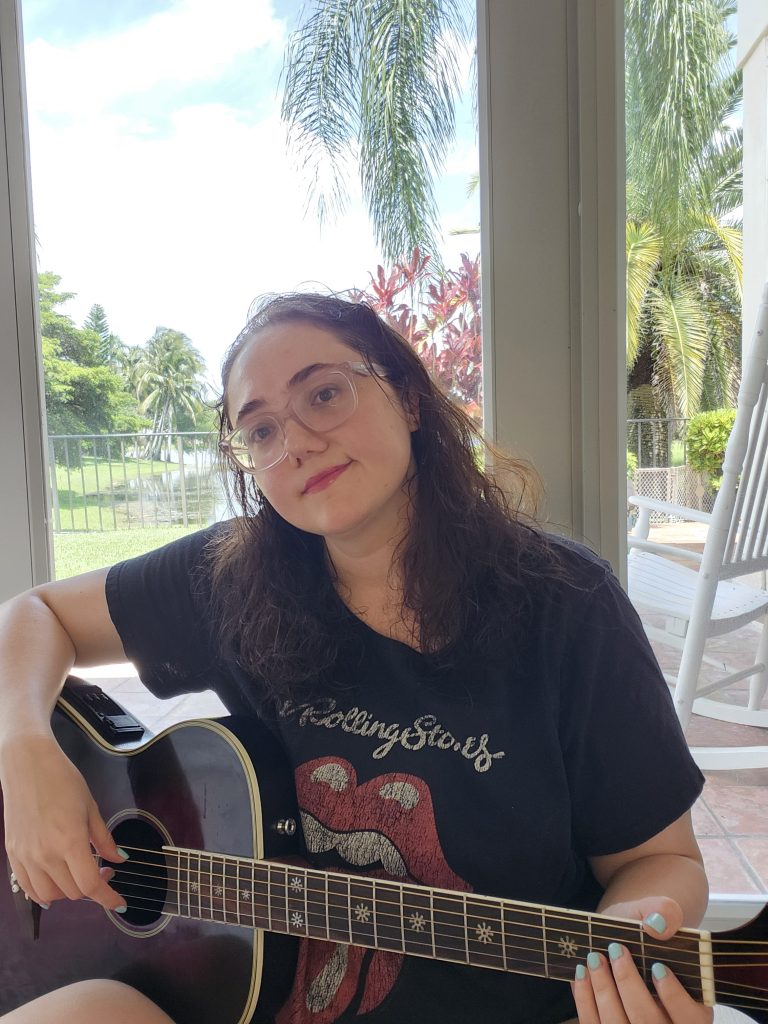
Lauren Grace Zemel with acoustic guitar, Rolling Stones shirt, natural light, South Florida background

Lauren Grace Zemel Writer Β· Model Β· Radiologic Technology Student Β· Wellness Explorer

South Florida based creative building a life at the intersection of science, storytelling, and community. Gentle Strength is my home base.

πŸ“Έ @laurengracezemel 🌿 laurengracezemel.com

Visual Storytelling In Ink

I see a map of the person I was fighting to become.

I didn’t realize until recently that my tattoos tell one continuous story. To me they were just always little marks that I had dreamed about since I was a child. It didn’t matter to me that my family was very anti-tattoo. I could see the art and weight each strike of ink carried. And I knew that I was going to at least have seven of them. Each tattoo meaning something specific. Each one chosen with intention.


I got my first one at eighteen β€” impulsive, maybe, but also the most honest thing I had ever
done. It was the tattoo I knew I wanted the most. Over the years, more followed. Each one felt separate at the time: a checklist item here, a symbol there, words pressed into skin because I needed them close. But when I look at them together now, I see something I didn’t plan. I see a map of the person I was fighting to become. All before I even was old enough to put all of that together.

In Perpetuum et Unum Diem β€” ribcage


Forever and one day. I was eighteen when I got this, and somehow I already knew. We carry things with us. The grief, the love, the versions of ourselves we’ve outgrown but haven’t quite let go of. That John Locke may have had a point about us being a sum of our memories.

This Latin phrase lives on my ribcage β€” close to my lungs, close to my breath β€” because the things that matter don’t leave us. They just change shape. Learning to carry them gently is its own kind of strength. Learning to live with them is how you end up fulfilled.

Second Star to the Right β€” behind my ear

Peter Pan. A movie that on its own I am actually not a huge lover of. However, it had one symbol so prominently perfect that I thought I must have it β€” in my own style. Behind my ear, small enough to be a secret, meaningful enough to be permanent.

This one is a promise I made to myself: to never let the world fully harden me. To hold onto wonder, play and childish imagination. To protect the part of me that still believes in magic, still finds joy in small things, still remembers the dragon on her childhood bedroom wall and wanted to fly.

The world will try to take that from you. Growing up is often just a slow, polite way of being told your softness and wonder is inconvenient. This tattoo is my refusal to submit to a reality where we forget to giggle.

Semicolon β€” wrist


You already know what this one means. A semicolon is used when a sentence could have ended, but didn’t. The author chose to continue. I chose to continue. That’s all I’ll say about that β€” and it’s everything. Because I want to remind everyone that no matter how hard things are one thing will always remain true β€” change. It’s the most real guarantee we can have.

A note: I’m a proud ambassador for Own Your Stigma β€” a community built on the radical idea that mental health struggles are not shameful. If this resonates with you, they’re worth knowing. Use code 25%OFFAMBASSADOR33 for 15% off.

Jewish Star with Buddhist Ties β€” ankle


I have never fit neatly into one box. When I was a kid I didn’t fit in well with the Jewish community around me. When I was older I didn’t fit in with other communities well because I was Jewish. It felt like Γ©cartΓ¨lement. This tattoo is my peace with the idea that fitting into one neat box was never really supposed to be the goal in the first place. The goal was always just finding your own moral character.

My Jewish roots run deep β€” the culture, the history, the sense of belonging to something ancient and resilient. And Buddhism found me when I needed a framework for the interior life: impermanence, compassion, the practice of presence. These two things coexist in me. This tattoo says: you are allowed to hold more than one truth at a time. Complexity is not contradiction. It’s just being whole.

Milton Quote β€” arm


This one is the one people ask about most. And the answer is simple: I put it on my arm because I needed to be able to see it. I have been through my own hell. I pulled myself out of it β€” slowly, imperfectly, with a lot of help and a lot of stubbornness. And there are so many times when I feel like I am literally back in the swamp.

So when it came time for me to finally get the John Milton tattoo I always wanted I switched lanes. I didn’t go for the romance and poetry. I went for the visual reminder I can always see for myself. The way is long. The way is hard. But there is light at the end, and you are already moving toward it.

β€”

Gentle Strength was never just a name. It’s the thing I’ve been practicing my whole life β€” learning to be soft and strong at the same time, to survive without becoming hard, to carry my story without being crushed by it.


These tattoos are the proof that I’ve been working on it for a long time. And I’m still working on it. That’s the whole point.


β€” Lauren πŸ––πŸ»


Lauren Grace Zemel with acoustic guitar, Rolling Stones shirt, natural light, South Florida background

Lauren Grace Zemel Writer Β· Model Β· Radiologic Technology Student Β· Wellness Explorer

South Florida based creative building a life at the intersection of science, storytelling, and community. Gentle Strength is my home base.

πŸ“Έ @laurengracezemel 🌿 laurengracezemel.com

On Maslow, Identity, And The Long Road To Becoming The Healer

Not the absence of edges. The decision about where to put them.

I have been told, more than once, that I am a natural asshole.


Not maliciously β€” at least not always. More in the way someone says it when they mean you are direct. Blunt. That social graces do not come naturally to you the way they seem to come naturally to everyone else in the room. That you say the thing. That you don’t cushion it first.


I spent a long time trying to figure out what to do with that. You can only intend to be okay with it so much as a kid? When really you are sitting there in the corner of the room alone wondering what went wrong that you turned out so different. Did you watch too much Star Trek with your grandpa?

On Maslow and the Gap


You’ve probably seen Maslow’s hierarchy of needs. The pyramid. Physiological needs at the base β€” food, sleep, safety. Then belonging. Then esteem. And at the top, the peak that most of us spend our whole lives pointing at without ever quite reaching it: self-actualization. Fulfillment. Becoming the fullest version of yourself.


What I’ve noticed is that most of us never get there. Not because we aren’t trying. Because we spend so much time managing the lower levels β€” surviving, proving ourselves, looking for belonging in places that don’t quite fit β€” that we never get to ask the question that actually matters. Not what do I want to do. But who do I actually want to be.

The Romulan Phase


For a long time I thought I had the answer. I was going to be a humanitarian lawyer. The asshole in someone else’s corner when they needed one. A Romulan β€” if you’ll allow me this β€” operating in the shadows for good. Sneaky. Strategic. Willing to do the complicated moral math that other people preferred not to think about.


I liked that version of myself. She was competent and sharp and she knew exactly what she was for.
And then I realized I didn’t actually want to be a lawyer. And that version of myself collapsed.


The Klingon Phase


After that came what I can only describe as my Klingon phase. If I couldn’t be the strategic long-game player maybe I could just be the warrior. Live short but gloriously. Enter the halls of Valhalla. Fulfill a childhood dream of burning bright enough that it didn’t matter how long it lasted.


I understand now that this wasn’t ambition. It was bargaining with grief. It was what happens when you lose the story you were telling yourself about who you were going to be and you reach for the most dramatic alternative available.


It wasn’t self-actualization. It was the opposite. It was a performance of purpose designed to avoid the question underneath it.

The Science of Wellbeing


The thing that changed everything was a Coursera class. The Science of Wellbeing by a Yale professor named Laurie Santos. I took it on a slow afternoon with no particular expectations and because it reminded me of a silly off comment I once made about wanting to be buried under Yale library. And it quietly rearranged something in me.


What the research actually shows β€” not what we’re sold, not what looks good on a vision board β€” is that purpose and fulfillment don’t come from money or status or achieving the specific job title you had in mind at twenty-two. They come from something more interior and more relational than that.


I started asking different questions. Not what do I want to accomplish. But how do I want to move through the world. What kind of presence do I want to be for other people. What community do I want to build and belong to.


And answering those questions β€” actually sitting with them instead of reaching past them toward the next achievement β€” led me somewhere I didn’t expect.

The Healer

Lauren in blue scrubs and a dark top sitting on stairs with a badge

It led me to healthcare. Not the frontline fighter. Not the strategist in the shadows. Not the warrior going down in flames. The healer. The backline support. The one in the RPG party who doesn’t always get the glory but is quietly the reason everyone else is still standing.


I am the member of the party keeping these fuckers alive.


And I had to sit with that for a while. Because there is a voice β€” and maybe you know this voice β€” that says support is lesser. That if you’re not the one at the front taking the hits you are somehow less essential. Less important. Less.


That voice is wrong.


Women have been showing up as quiet strength for decades. The backbone. The hand on someone else’s back in the moment when they need it most. The person who notices what everyone else is too busy to see. That is not a supporting role. That is the role that makes everything else possible.

Gentle Strength


I am still, for the record, an asshole.


I am still blunt. I still say the thing. Social graces are still a conscious effort rather than a natural instinct.
But I have found what to do with it. I am the asshole who shows up for you. The one in your corner when you need someone who will tell you the truth and stay anyway. The one who will do the complicated moral math and hand you the answer without making you feel small for needing it.


That is my gentle strength. Not the absence of edges. The decision about where to put them.


And getting here β€” to this answer, to this version of the question β€” required losing the stories I had about myself first. The Romulan. The Klingon. The lawyer. The warrior.


What was left underneath all of them was the healer. She was there the whole time.


I just had to stop performing long enough to meet her.

β€” Lauren πŸ––πŸ»


Lauren Grace Zemel with acoustic guitar, Rolling Stones shirt, natural light, South Florida background

Lauren Grace Zemel Writer Β· Model Β· Radiologic Technology Student Β· Wellness Explorer

South Florida based creative building a life at the intersection of science, storytelling, and community. Gentle Strength is my home base.

πŸ“Έ @laurengracezemel 🌿 laurengracezemel.com

On Identity, Assumptions, And The Coming Out That Never Felt Like One

I’m bisexual. I wasn’t hiding. You just never asked.

I have known I was bisexual for most of my life.

I didn’t agonize over it. I didn’t lie awake confused. I didn’t have a slow dawning realization I had to sit with for years. It was just a thing that was true about me, the way being left-handed is true about some people, unremarkable and just sort of there.

The problem wasn’t knowing. The problem was that nobody ever asked.

The Assumption Nobody Examines

Here is how it works, more often than people realize: the world looks at you and makes an assumption. In my case the assumption was straight. Nobody asked a follow-up question. Nobody left a gap in the conversation where a different answer could have fit. Straightness was just assigned, quietly, the way it gets assigned to most people, and then everybody moved on.

I didn’t correct it. Not because I was ashamed. Not because I was scared. But because it never came up, and bringing it up myself felt like making an announcement about something that didn’t feel announcement-worthy to me. It was just true. It had always been true. It felt strange to treat it like news.

So I didn’t. For years.

The Pressure That Built Up Anyway

Here’s what nobody tells you about being bisexual and quiet about it for a long time: eventually the silence starts to feel like a statement you didn’t mean to make.

By 29 I had been casually, undramatically bisexual for my entire adult life and had told almost no one. Not because of a closet. Not because of shame. Just because the moment had never arrived organically and I had never manufactured one.

And then I started to feel a pressure I hadn’t anticipated. A sense that I had waited too long, that not having come out formally by 29 meant I now owed people a bigger explanation than I would have at 19. That the delay itself required justification. That I had somehow done something wrong by simply existing without making an announcement.

The coming out scripts I had ever seen were designed for someone younger, someone in a family crisis, someone with something dramatic at stake. They weren’t designed for a 29 year old who just quietly knew and never made a thing of it and now felt weirdly obligated to perform a moment she’d never actually needed.

What It Actually Looked Like

When I finally did it β€” finally said the word out loud in context, finally made it a declared thing β€” it was awkward. It was performative. It felt completely unlike me.

It felt like putting on a costume for an occasion I hadn’t actually planned to attend. Like reading lines from a script written for someone else’s story. The people I told were kind. The responses were warm. And I still felt, through all of it, vaguely like I was doing something wrong β€” not morally wrong, but tonally wrong. Wrong for who I actually am and how I actually move through the world.

I’ve thought about that a lot since. About the gap between what coming out looked like and what it felt like. About how the performance of it, however well-intentioned, managed to make the most authentically known thing about my identity feel suddenly foreign and strange.

What I Actually Wish

I wish someone had just asked.

Not intrusively. Not as an interrogation. Just β€” left space. Created room for an answer that wasn’t the default. Let the assumption be a question instead.

I wish the cultural script for coming out had a version that went: hey, this is just true about me, it’s always been true, it’s not a big deal to me personally, I’m telling you because I want you to know, full stop. No fanfare required. No milestone energy. Just a fact, shared between people who know each other.

I’m bisexual. I wasn’t hiding. You just never asked.

And now you know.

A Note for Anyone Who Recognizes This

If any part of this resonates β€” if you’ve been quietly, undramatically something for years and the idea of formalizing it feels more awkward than the thing itself β€” I want you to know that’s valid. There’s no deadline. There’s no minimum level of drama required. Your identity doesn’t owe anyone a performance.

You can come out in a blog post at 29. You can come out in a conversation. You can come out by simply not correcting an assumption anymore. You can do it however it actually feels like you, because the whole point is that it’s yours.

If you or someone you know needs support, The Trevor Project provides 24/7 crisis intervention for LGBTQ+ youth.

Happy Pride. πŸ–€πŸ©·πŸ’œ

β€” Lauren πŸ––πŸ»


Lauren Grace Zemel with acoustic guitar, Rolling Stones shirt, natural light, South Florida background

Lauren Grace Zemel Writer Β· Model Β· Radiologic Technology Student Β· Wellness Explorer

South Florida based creative building a life at the intersection of science, storytelling, and community. Gentle Strength is my home base.

πŸ“Έ @laurengracezemel 🌿 laurengracezemel.com

Gentle Strength

I built this space because I needed it to exist, and it didn’t yet. Simple as that. Complicated as that.

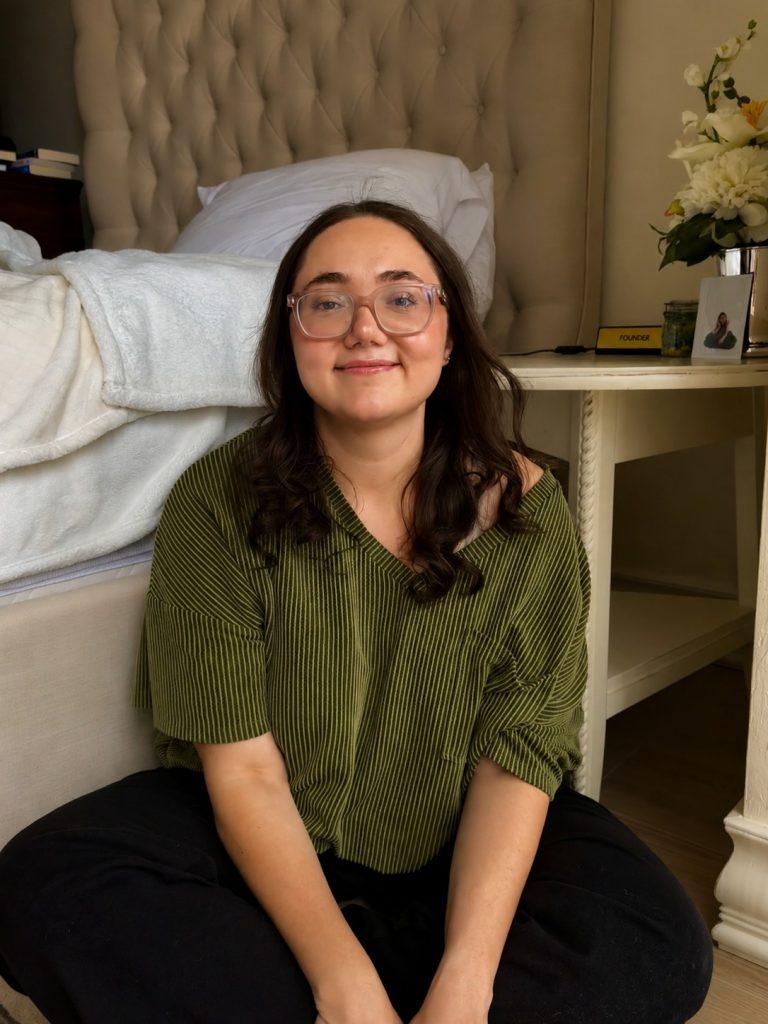
Lauren sitting cross-legged on her bedroom floor in a green striped shirt smiling at the camera

Hey there. I’m Lauren. And I have absolutely no idea how to start this.

I’ve rewritten this opening a few times now. The first version was too formal β€” it sounded like a
LinkedIn bio that had developed feelings. The next was too casual, the kind of breezy ‘hey babes!’ energy that makes me cringe a little even when other people do it. Especially, when I’m forcing myself to write like that. The third got philosophical way too fast. You don’t need Nietzsche in the first paragraph. Probably. At least that’s what they tell me.

So here’s the truth: I built this space because I needed it to exist, and it didn’t yet. Simple as that. Complicated as that.

Gentle Strength

That phrase has lived in my head for a long time before it became a brand. It came from noticing something in myself β€” that the times I felt most powerful weren’t the times I was hard, or loud, or armored up. They were the times I stayed soft on purpose. Chose to stay open when closing would have been easier. Kept going without becoming someone I didn’t recognize or returned just from the edge of about to be lost for good.

That’s gentle strength. It’s not passive. It’s actually one of the harder things I know how to do.
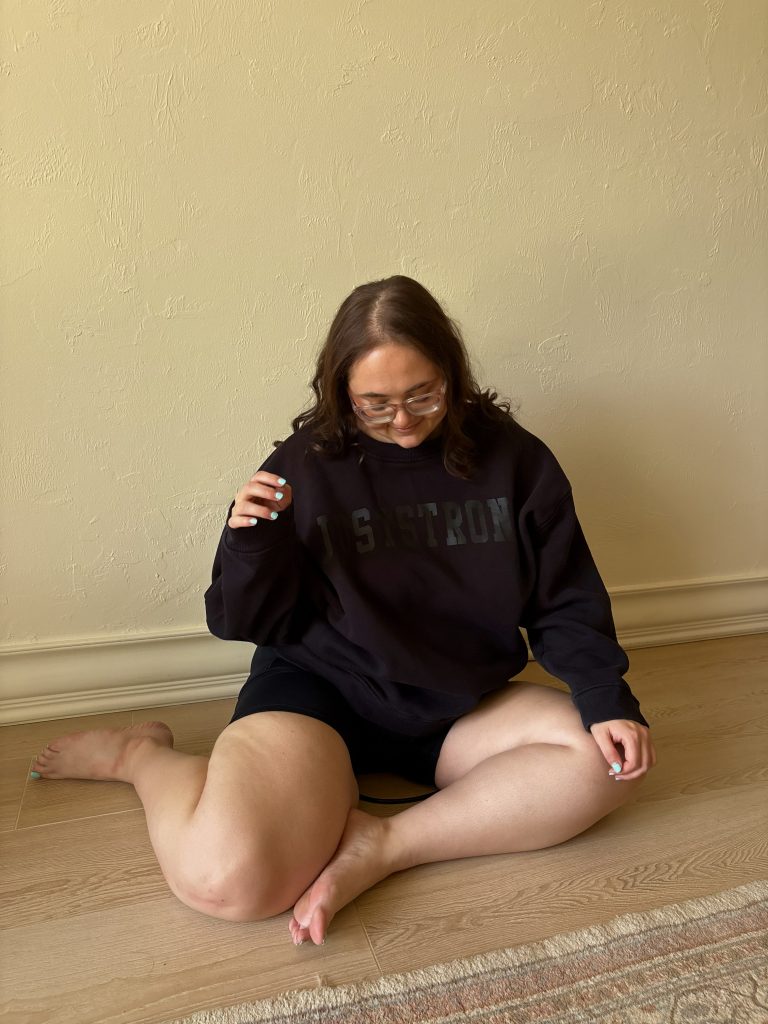
A note: I’m a proud ambassador for Just Strong β€” a brand built for women who are learning to take up space unapologetically. If you’re looking for pieces that actually move with you and remind you why you started, they’re worth checking out. Use code LAZE813909 for 10% off.

So what is this place, exactly?

Honestly? A lot of things. Which I know is not the clean elevator pitch you’re supposed to lead with. But I am a lot of things, and I’ve spent enough time trying to fit into one neat category to know it doesn’t work for me.

Here you’ll find writing β€” fan fiction, poetry, original work, all of it unapologetically. You’ll find wellness content rooted in functional medicine and the deeply personal journey of figuring out what actually helps your specific, complicated, beautiful body and brain. You’ll find my charity work, the causes I lose sleep over, the ways I try to show up for my community. You’ll find modeling and media, creative projects, tabletop gaming, a newsletter, and eventually a shop and a YouTube channel because apparently I contain multitudes and I’ve stopped apologizing for it.

What ties it together is the philosophy. Everything here is an attempt to live gently and strongly at the same time.

A little about me, briefly:

I’m a writer, a model, a community advocate, a chronic overthinker, and a person who has been through some things and came out the other side still fundamentally myself β€” which feels like the greatest achievement of my life so far. I’m Jewish and Buddhist, which confuses people at first and makes complete sense once you know me. I have tattoos that tell a story I’ll share with you soon. I care deeply, sometimes too much, and I’ve learned to treat that as a feature rather than a bug.
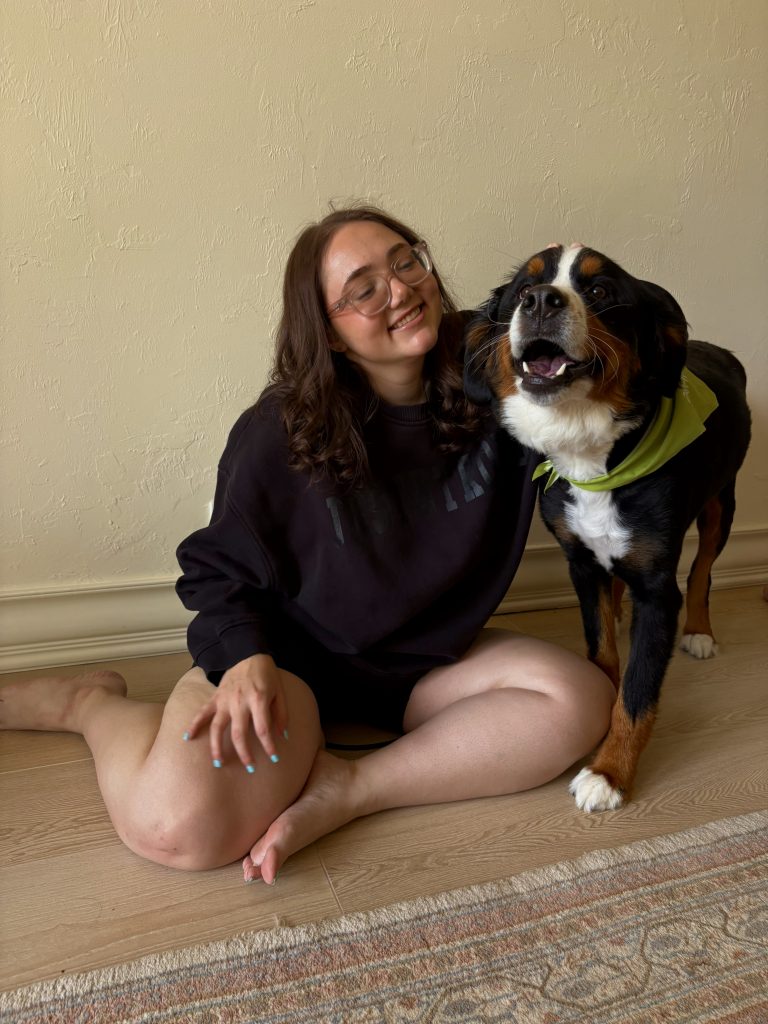
Lauren Grace Zemel smiling and sitting on the floor with her Bernese Mountain Dog, Atlas, wearing a green bandana

Why now?

Because there’s never a perfect time and I got tired of waiting for one. Because I kept having conversations β€” online, in person, in my own head at 3 in the morning β€” where I thought: this should be somewhere. I should be somewhere. So here I am. Here we are.

I don’t have everything figured out. This site will grow and shift as I do. Some posts will be polished. Some will be raw. All of them will be honest. Because I can tell you as someone who once hit the bottom β€” honesty is something you can always carry with you and hold close.

If you found your way here because something about the words ‘gentle strength’ felt like something you needed β€” welcome. You’re in the right place. Pull up a chair. I’m really glad you’re here. We can share tales by the imaginary fire, trade recipes, sing really badly or just kiki.

β€” Lauren πŸ––πŸ»


Lauren Grace Zemel with acoustic guitar, Rolling Stones shirt, natural light, South Florida background

Lauren Grace Zemel Writer Β· Model Β· Radiologic Technology Student Β· Wellness Explorer

South Florida based creative building a life at the intersection of science, storytelling, and community. Gentle Strength is my home base.

πŸ“Έ @laurengracezemel 🌿 laurengracezemel.com